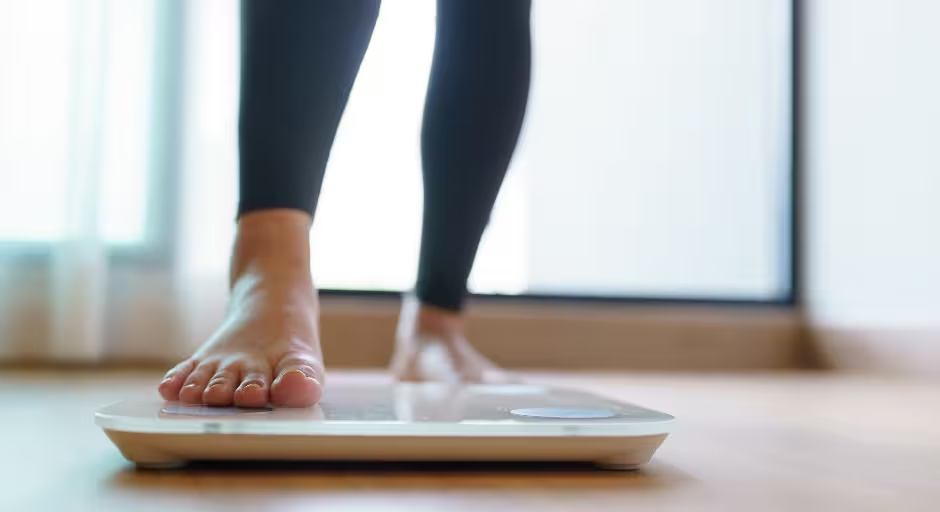
The scale can be helpful, but it’s also incredibly limited. If it’s the only thing you’re paying attention to, you’re probably missing most of your progress.
There’s a moment in almost every weight loss journey where the scale starts to feel like the main character. One number decides whether the day feels successful or frustrating, whether you feel “on track” or like you’ve somehow failed overnight.
The problem is that the scale was never designed to tell the full story. It reflects body weight, yes, but that number is influenced by far more than just fat loss. Water retention, sodium intake, hormones, digestion, stress levels, sleep quality, and even when you last ate can all shift the scale up or down in ways that have nothing to do with actual progress.
When we rely too heavily on that single number, we end up reacting to short-term fluctuations instead of long-term trends. That’s where frustration builds, even when real progress is happening in the background.
If the scale has ever made you feel like you’re doing everything right and getting nowhere, this is where it’s important to zoom out and look at what’s actually changing.

One of the most overlooked indicators of progress is how you feel throughout the day. Energy levels often improve long before the scale reflects significant change.
You might notice you’re not crashing in the afternoon as much, or that you’re getting through your day without relying on constant caffeine or sugar for a boost. These shifts matter. They reflect changes in how your body is using fuel and regulating blood sugar, even if the scale is moving slowly or unpredictably.
When energy starts to stabilize, it usually becomes easier to stay consistent with movement, meal choices, and daily routines, which compounds progress over time.
Clothing is often a more reliable progress marker than the scale alone. As body composition shifts, even small changes in fat loss and muscle retention can affect how clothes fit.
You might notice jeans fitting differently around the waist, shirts feeling looser in the shoulders, or certain pieces becoming more comfortable than they used to be. These changes don’t always happen in a perfectly linear way, but they are often a clearer reflection of real body changes than daily weigh-ins.
The scale might stay the same for a week or two, but your body can still be changing underneath that number.

Progress isn’t just about appearance. It’s also about function.
If you’re getting stronger, moving more comfortably, or recovering faster from workouts, that’s a meaningful shift in your body’s capacity. Even something as simple as walking longer distances without fatigue or feeling more stable during strength training is a sign that your body is adapting in a positive way.
These improvements often show up alongside fat loss, but they’re not always reflected on the scale. In fact, sometimes strength increases while weight stays the same, especially if you’re preserving or building lean muscle.
Another important thing to pay attention to is your relationship with hunger and food.
If you’re feeling more in control around food, experiencing fewer intense cravings, or noticing that meals keep you satisfied longer, that’s real progress. These changes often signal improved metabolic regulation and more stable eating patterns.
This becomes especially noticeable for people using GLP-1 medications through HealthiCare, where appetite and food noise may naturally quiet down. But even outside of medication, learning to recognize more balanced hunger cues is a key part of long-term sustainability.

If you’re using GLP-1 medications through HealthiCare, it can be easy to assume the scale should be the primary measure of success because weight loss may happen more quickly or consistently at first. But even in this case, the scale still doesn’t capture the full picture of what’s happening in your body.
With GLP-1 support, appetite is often reduced, which can lead to changes in meal timing, portion sizes, and overall intake. Without additional structure, it’s possible to miss out on key markers of progress like protein consistency, hydration, strength maintenance, and energy stability.
That’s where HealthiCare and the Healthi app work together to support a more complete picture of progress. With licensed clinicians guiding your treatment plan and the Healthi app helping you track meals through the BITE system, you’re able to focus on more than just weight alone. Tools like the Healthi Fresh plan also help ensure that even with reduced appetite, you’re still supporting your body with enough protein and fiber to maintain energy, protect muscle, and stay consistent.
When you combine medical support with structured tracking, progress becomes less about reacting to a single number and more about understanding the bigger changes happening across your habits, energy, and overall health.
The scale still has value, but it works best as one data point among many, not the final verdict on your progress.
Daily fluctuations are normal. Weekly plateaus are normal. Even periods where the scale doesn’t move at all can still be part of meaningful change happening underneath the surface.
When you start tracking a wider range of indicators, the journey becomes less emotionally reactive and more grounded in reality. You stop treating one number as a judgment and start using it as just one small piece of information in a much bigger story.

Real progress is more complex than a single number on a scale. Energy, strength, habits, hunger cues, and how your body feels day to day all matter just as much, if not more.
When you widen what you’re tracking, you give yourself a more accurate picture of what’s actually happening. And more importantly, you stop letting one fluctuating number define how successful you are.
Progress is not always loud. Sometimes it shows up quietly in how you move, how you feel, and how you live your everyday life.
September 23, 2026