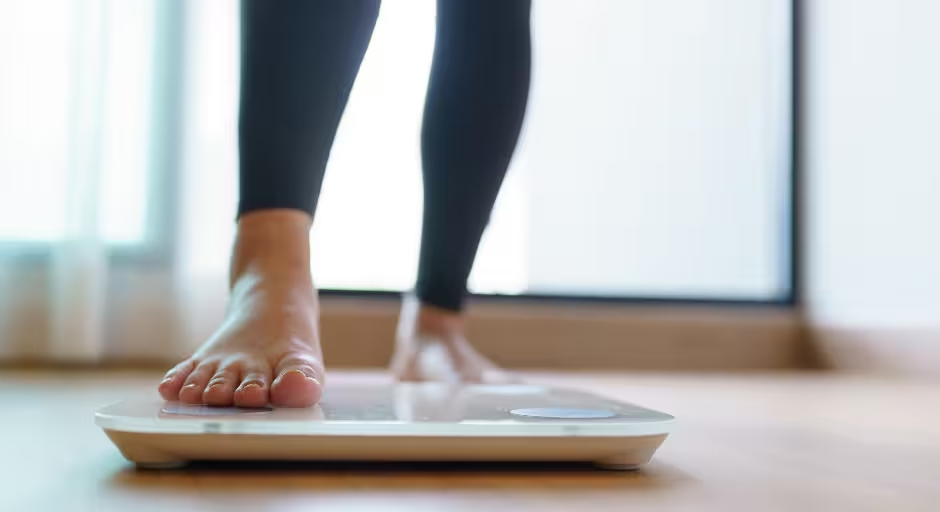


The scale may be one tool in your wellness journey, but it doesn’t get to decide how you’re doing. Learn how to focus on the progress that truly matters—and why daily fluctuations are more normal than you think.
If you’ve ever let the number on the scale decide whether you’re having a good day, you’re not alone. Learning how to stop letting the scale control your mood is an important part of building a healthier, more sustainable weight-loss mindset. Your weight can fluctuate for plenty of normal reasons, but your progress is about so much more than a single number.
There’s nothing quite like stepping on the scale in the morning, holding your breath for no logical reason, and letting one tiny screen decide whether you’re having a “good” day or a “why do I even try?” day.
We’ve all been there.
The number goes down and suddenly you’re a wellness icon. It goes up a pound, and you’re convinced your entire routine has failed—even though you drank water, moved your body, made nourishing choices, and slept like a person who has emails.
Here’s the truth: the scale can be useful information. But it is not a report card on your health, your effort, or your worth.
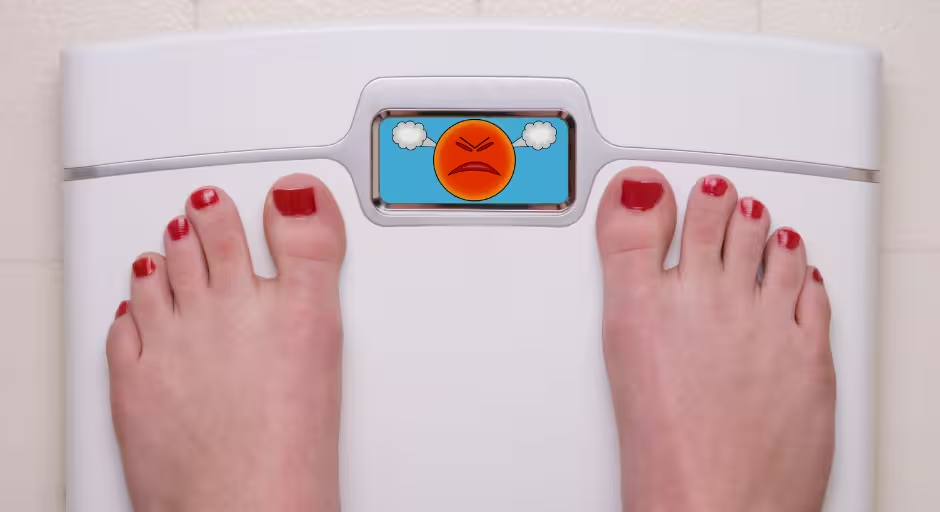
Your body weight naturally shifts from day to day. Hydration, sodium, hormones, digestion, sleep, stress, muscle soreness, and whether or not you’ve gone to the bathroom can all affect that number.
That means a higher number does not automatically mean fat gain. Sometimes it means you had sushi last night. Sometimes it means your cycle is doing its thing. Sometimes it means your body is being a body—rude, but normal.
When we treat every fluctuation as a verdict, it can make healthy habits feel pointless. But progress is rarely a straight line. It’s more like a toddler with a crayon: messy, unpredictable, and still somehow going somewhere.
If the scale is your only way of tracking progress, you’re missing a lot of meaningful changes. Consider asking yourself:
Those wins count. In many cases, they’re the foundation for lasting change.
A number can change overnight. The ability to trust yourself around food, move your body because it feels good, or bounce back after an off-plan meal? That’s the kind of progress that sticks.
You don’t necessarily have to break up with the scale forever. But you may need to redefine the relationship.
Try these approaches:
Use it as data, not drama. If you choose to weigh in, notice the number without attaching a story to it. One weigh-in is a snapshot, not the full movie.
Watch trends instead of single days. Daily ups and downs are normal. Looking at patterns over several weeks can give you a clearer picture.
Set boundaries. If weighing yourself sends you into a spiral, it’s okay to weigh less often—or not at all. Your well-being matters more than having one more data point.
Pair it with other measures. Track how you feel, how you’re sleeping, your energy, strength, measurements, or habit consistency.
The Healthi app can be a helpful place to focus on those everyday choices—like planning satisfying meals, keeping an eye on your goals, and building consistency—without making the scale the main character.

Health is not earned by hitting a certain number. And it is not erased by pizza night, vacation, a stressful week, or a random Tuesday when your pants feel tighter.
Real progress is often quieter than we expect. It looks like choosing a balanced breakfast. Taking a walk when you’d rather scroll. Trying again after a tough day. Learning what helps you feel your best.
If you’re looking for more support along the way, Healthicare makes it easier to connect with care that fits into real life—and it’s now available at our lowest price ever. Because getting support for your health should feel doable, not like another obstacle standing between you and your goals.
The scale is allowed to be one tool in your toolbox. It just doesn’t get to be the boss.
You are doing more than a number can measure.
September 23, 2026