

Thanksgiving is one day, not six weeks. Coach Lisa shares how to enjoy holiday food, skip the guilt, handle leftovers and keep your progress.
Well, here we are again. The calendar has brought us right back around to that wonderful, chaotic, delicious, occasionally exhausting time of year we call the holiday season.
You know the one. Grocery stores turn into obstacle courses of pumpkin pies, Christmas cookies, chocolate-covered everything, and enough seasonal coffee creamer to open a small dairy farm. Every other commercial shows an impossibly happy family smiling at a perfectly roasted turkey. Apparently nobody in those commercials has ever burned the dinner rolls, forgotten to thaw the turkey, or discovered five minutes before dinner that somebody used the last of the butter. I suspect real holidays are usually a little more interesting than the commercials.
And somewhere between the decorations, the shopping lists and the family gatherings, another familiar guest shows up, often even earlier than the Christmas decorations: holiday weight anxiety.
What am I going to eat? What should I avoid? What if I gain weight? And, depending on how many years you've spent dieting, the most familiar one of all: What if I mess everything up?
I think we've spent far too many holiday seasons worrying about getting everything right, and not nearly enough time on what enjoying the holidays while taking care of ourselves could actually look like. So this year, I'm doing things differently. Over the next several weeks, I'll cover food, of course, but also family, traditions, expectations, stress, and those moments when the holidays look nothing like the greeting card. We'll talk about navigating gatherings whether you're trying to lose weight, maintain, or simply build a healthier relationship with food. And we'll talk about what happens when life doesn't cooperate with our carefully made plans, because life doesn't stop being life just because somebody plugged in the Christmas tree.
But today, I want to start with one big idea.
Simple, I know. But sometimes the simplest ideas change how we approach an entire season.
Think about when holiday eating starts. For some of us, it's October, when the Halloween candy appears. For others, it's November, when Thanksgiving prep gets underway. And once Thanksgiving arrives, it's like someone flips a switch: leftovers, cookies at work, holiday parties, family dinners, homemade treats, neighborhood gatherings, Christmas, New Year's. Before we know it, it's the first week of January and we're wondering what on earth happened to November and December.
But look at the calendar. The actual holidays take up surprisingly little space. Thanksgiving is one day. Christmas is one day. New Year's Day is one day. Depending on your family, culture and traditions, you may celebrate other holidays or have several days of meaningful gatherings, and that's wonderful. Even so, there's a big difference between enjoying special occasions and deciding the entire season is one continuous special occasion.
I don't believe we need to spend November and December avoiding everything delicious. And I definitely don't believe we need to spend January feeling guilty about everything we enjoyed. There's a middle ground, and that's where we build habits that actually work in real life.
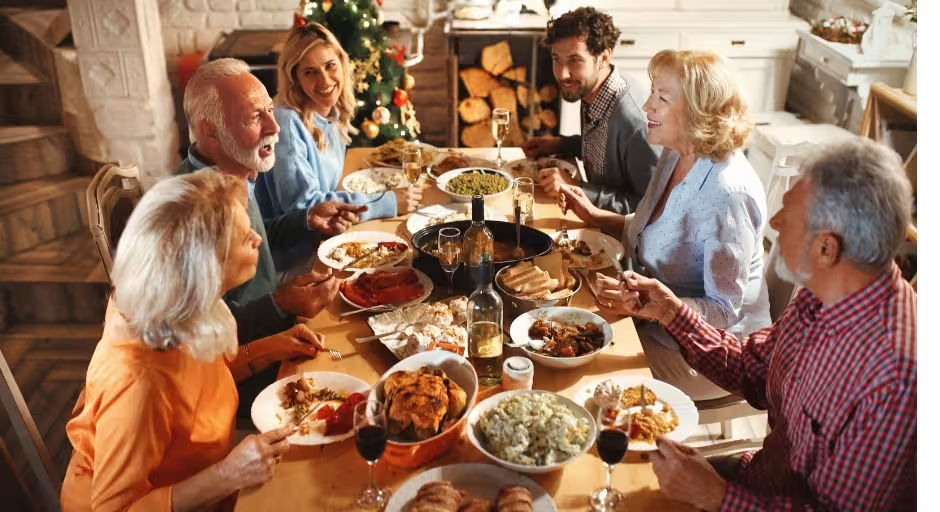
It starts innocently. You decide to enjoy Thanksgiving dinner. Perfectly reasonable. Turkey, mashed potatoes, stuffing, gravy, cranberry sauce, a slice of your favorite pie. Afterward you're satisfied, maybe a little too satisfied. We've all had that moment when the couch looks like the greatest invention in human history.
Then the snowball starts rolling. The next morning, instead of thinking "That was a lovely Thanksgiving dinner," you think, "I really blew it yesterday." So you skip breakfast to make up for it. By lunchtime you're hungry. Really hungry. You eat more than you intended, and now you're frustrated. The leftovers are sitting in the fridge, somebody brought home another pie, and you think, "Well, I've already messed up Thanksgiving weekend, so I might as well start fresh on Monday."
Monday arrives, but there's a holiday luncheon on Wednesday. Then a dinner invitation on Friday. And before you know it, you're looking at the calendar thinking, "Maybe I'll just start again in January."
Sound familiar?
Notice something important about that sequence. The problem wasn't Thanksgiving dinner. It wasn't the stuffing. It wasn't the pie. And it certainly wasn't enjoying a meal with people you care about. The problem was the story that started afterward: the story that one meal had somehow erased all your other choices, that you'd failed, and that because you'd failed, there was no point continuing. That's the all-or-nothing mindset at work, and it can turn a perfectly ordinary holiday celebration into weeks of frustration.
Here's the wonderful thing about recognizing that pattern: once you see it, you can interrupt it. Not by becoming stricter. Not by punishing yourself. And definitely not by deciding mashed potatoes are now your sworn enemy. You interrupt it by changing what happens after the celebration.
Picture that same Thanksgiving dinner. You enjoy your favorites. You spend time with family or friends, or enjoy a quiet meal at home. You have dessert. And the next morning? You wake up, have your usual breakfast when you're hungry, drink some water, and carry on with your normal routine. No dramatic restart. No punishment. No waiting until Monday. Just another day.
I know that sounds almost too easy, but it's a powerful shift. The goal isn't to become someone who never enjoys a holiday meal. It's to become someone who knows how to enjoy one and then keep living her life.
One of the most unhelpful things diet culture taught us is that every meal needs a grade. Good meals and bad meals. Good days and bad days. On track or off track. Doing wonderfully, or completely blew it.
Somewhere along the way, we started treating our food choices as evidence of our character. If we eat the salad, we're disciplined. If we eat the pie, we're weak. One cookie means success. Three means failure.
But food doesn't work that way, and neither do people. A meal is not a moral test. It's a chance to nourish yourself, enjoy something, take part in a tradition, or simply satisfy your hunger, and sometimes it's all of those at once.
Healthy eating doesn't require every meal to look identical. Think about someone who usually eats balanced meals with vegetables, fruit, lean protein and whole grains, the foods that help her feel her best. Then Thanksgiving arrives, and dinner looks a little different: more butter, more gravy, a dessert she doesn't usually eat. Does that mean her usual habits have vanished? Of course not. They didn't disappear because someone served pecan pie, and she can return to them at the very next meal.
That's what consistency really looks like. It isn't doing the exact same thing every day. It's returning to the habits that support you, even when life includes something different. Perfection says, "I must never deviate from my plan." Consistency says, "I know how to return to what works for me." When it comes to eating, celebrating and living our lives, consistency is a much more realistic companion.
You know I can't resist bringing a little science or math into things. Don't worry, nobody needs to sharpen a pencil. I just want to show you why one celebration doesn't deserve quite as much power as we give it.
The stretch from Thanksgiving to early January is about six weeks, or roughly 42 days of breakfasts, lunches, dinners, snacks, workdays, weekends and ordinary routines. Say you have six special celebrations in that time: Thanksgiving dinner, a family gathering, a work party, Christmas dinner, a birthday and New Year's Eve. If you eat three meals a day, that's about 126 meals across those six weeks.
Six special meals out of 126 is less than 5%.
Everybody eats differently. Some of us eat twice a day, some more often, and some celebrations last all day or stretch over several days, so the exact numbers aren't the point. The perspective is. When we say, "The holidays are coming and I'm going to struggle for six weeks," we turn a handful of special occasions into an expectation that every day will be hard. And expectations have a funny way of shaping our choices. If we expect November and December to be a disaster, we may stop noticing the ordinary chances we have to take care of ourselves.
So what if you picked the special occasions you really want to enjoy, and let the other days be exactly what they are? Ordinary days, when oatmeal is still oatmeal, a sandwich is still a perfectly good lunch, and vegetables haven't mysteriously disappeared from the grocery store just because Christmas cookies showed up. You can enjoy those special meals without turning every breakfast, lunch, dinner and snack into another celebration, and that alone can make the whole season feel a lot less intimidating.
If we're going to enjoy holiday food, let's make sure we're actually enjoying the food we choose.
Picture a holiday buffet: casseroles, rolls, potatoes, vegetables, meats, desserts, dips, appetizers, and enough cheese to make a small herd of dairy cows nervous. A little of this. A scoop of that. One of those. Two of these. Before long, your plate holds twelve different foods. But how many did you really want? Not how many looked interesting, or that somebody encouraged you to take, or that just happened to be sitting there. How many were you excited to eat?
Maybe you absolutely love your grandmother's stuffing. Maybe there's a sweet potato casserole that only appears once a year, or a homemade pie full of wonderful memories. Those foods might be worth making room for. But the dinner roll you grabbed automatically, even though rolls are available every day of the year? The store-bought cookies you don't particularly like? The casserole you took because someone was standing next to it and you didn't want to seem rude? Sometimes we eat foods not because we enjoy them, but because they're available. And during the holidays, availability is practically an Olympic sport.
So this season, practice asking yourself: "Is this something I really want?" If the answer is yes, enjoy it. Pay attention to it. Taste it. Appreciate it. If the answer is "eh, not really," maybe that's one food you don't need. You're not depriving yourself. You're choosing something that matters more to you. That's a very different experience from standing by the dessert table telling yourself you're not allowed to have anything. One approach is built on restriction. The other is built on intention, and intention gives you room to make choices without turning the meal into a battle.
What happens when you actually give yourself permission to enjoy holiday food? For some people, that sounds wonderful. For others, it sounds absolutely terrifying. If you've spent years on diets that sort foods into allowed and forbidden, permission can feel dangerous: "If I tell myself I can have the cookies, what's going to stop me from eating the whole plate?"
That's a fair question, especially if you've felt out of control around foods you've restricted for a long time. But here's something worth understanding: when we keep telling ourselves certain foods are forbidden, we can make them more emotionally powerful. They become special. Scarce. Something we need to eat now, because tomorrow we're going to "be good" again. And that creates urgency. Compare "I can never have pumpkin pie" with "I can enjoy pumpkin pie when I choose to." The first creates a rule. The second creates an option.
Permission doesn't mean everyone will suddenly stop overeating. Our eating is shaped by hunger, habits, emotions, environment, sleep, stress and individual health needs. And if you're managing diabetes, food allergies or a medical eating plan, there may be important nutritional boundaries to respect. But even within those boundaries, we can work toward making food choices without attaching guilt or shame to every one.
Because guilt doesn't make a holiday meal more nutritious. It doesn't magically undo calories. And it certainly doesn't make the celebration more enjoyable. We can acknowledge that some foods are more nutrient-dense than others. We can recognize that portions matter for our goals. We can make thoughtful decisions about how much we eat. And we can do all of that without deciding that enjoying a cookie is a personal failure.
In fact, I'd love for us to retire one particular holiday phrase: "I was bad." "I was so bad at Thanksgiving." "I was terrible at the Christmas party." "I shouldn't have eaten that." Unless you climbed onto the Thanksgiving table, stole the centerpiece and ran off with the turkey, I'm not sure we've established any actual wrongdoing. You ate food. Maybe more than you planned. Maybe something you hadn't intended to eat. Maybe you discovered you don't even like pumpkin cheesecake as much as you thought. That's information, not a character flaw. You can learn from it and decide what you'd like to do differently next time, without turning it into a verdict on your worth as a human being.
As you think about Thanksgiving and the celebrations ahead, try a different starting point. Instead of beginning with everything you think you shouldn't eat, begin with what you want the experience to be.
Maybe you want to enjoy your favorite family recipes. Maybe you want to finish dinner comfortably satisfied, not uncomfortably full. Maybe you want to enjoy the celebration without spending the whole evening mentally calculating what you've eaten. Maybe you want to wake up the next morning without feeling like you owe your bathroom scale an apology. Or maybe you simply want to pay more attention to the people around the table than the food on it. All of those are reasonable goals, and none of them requires you to be perfect.
Think about the foods you look forward to. Think about what usually helps you feel comfortable and satisfied. Notice whether you tend to arrive at gatherings starving because you've been saving all your calories or BITES for the main event. And think about how you can care for yourself throughout the day, instead of treating the holiday meal as something you have to earn.
Because you don't need to earn Thanksgiving dinner. You don't need to earn Christmas cookies. And you don't need to earn the right to take part in your own family traditions. You can make choices that support your goals and still be part of the celebration. We don't have to choose between taking care of ourselves and enjoying our lives. The challenge is learning to make room for both.
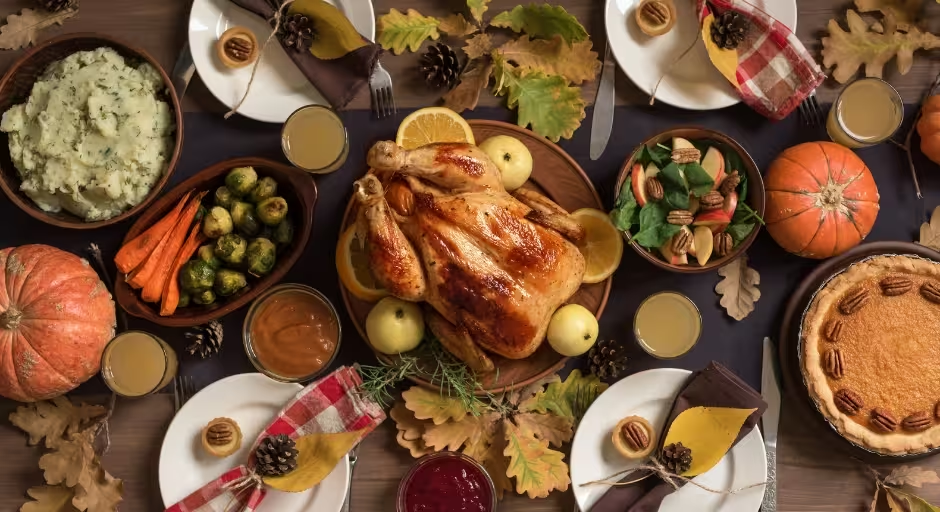
So how do we put all of this into practice? It's one thing to talk about enjoying holiday food without guilt while sitting comfortably at home. It's another thing entirely to stand in front of a Thanksgiving buffet with twelve casseroles, three kinds of potatoes, and a relative who keeps insisting you haven't eaten nearly enough.
That's where a little preparation helps. Not the kind where you calculate every possible bite three weeks in advance, and certainly not the kind where you try to survive Thanksgiving dinner on a plate of lettuce and a prayer. Just a few decisions made ahead of time, so you spend less energy worrying once the celebration begins.
And I don't just mean your weight-loss priorities. I mean your holiday priorities. What makes Thanksgiving feel like Thanksgiving to you? For some people, it's the traditional turkey dinner with all the familiar sides. For others, it's a family recipe passed down through generations, a special breakfast, the parade, or gathering around the TV for football. And if you don't celebrate Thanksgiving, think about whatever holiday coming up carries that same kind of meaning for you.
Think about what you want to experience, and then think about how your health goals can fit into those experiences, instead of assuming they have to compete.
Maybe Thanksgiving dinner includes three foods you absolutely love. Plan to enjoy them. You don't have to pretend they're suddenly unappealing just because you're following a weight-management plan. Maybe the other fifteen dishes on the table aren't nearly as important to you. And maybe you start with smaller portions of your favorites, knowing you can always have more if you're still hungry.
That's a plan. Not a punishment, and not a rigid set of rules. Just an intention. And the wonderful thing about an intention is that it gives you direction without needing the day to unfold perfectly.
This one deserves a little extra attention: please don't spend the entire day starving yourself before dinner.
I know why people do it. We've been taught that if we're going to eat a big meal later, we should save as many calories or BITES as possible beforehand. There can be room for flexibility in how you spread your food across the day, but there's a big difference between planning for a special meal and deliberately making yourself miserable with hunger.
Think about what happens when you arrive absolutely ravenous. Every appetizer looks irresistible. The cheese tray becomes your new best friend. You nibble while dinner's being prepared, and by the time everyone sits down, you've already eaten a good amount without really paying attention. Then dinner arrives, and because you've been looking forward to it all day, you eat that too.
You don't need a huge breakfast and lunch before a holiday dinner. But something balanced and satisfying earlier in the day can help you arrive comfortable enough to make thoughtful choices. Maybe that's breakfast with some protein and fiber, a light lunch, or something as simple as yogurt and fruit or eggs and toast, depending on when dinner is served. The goal isn't to erase your appetite. It's to avoid arriving so hungry you're seriously considering whether the decorative pumpkins are edible.
And while we're at it, remember your water. Between shopping, cooking, cleaning, traveling and visiting, it's easy to forget to drink until you're tired, thirsty and generally out of sorts. Nothing dramatic. Just keep your usual hydration habits going on a busy day.
If you use Healthi, tracking during the holidays can bring up some strong feelings. Some people find it incredibly helpful during special occasions. They like the information, appreciate the structure, and find that logging their food keeps them connected to their goals. Others find that calculating every ingredient in Grandma's homemade stuffing takes all the joy out of the meal. And even people who usually love tracking sometimes feel differently on a holiday.
So here's what I want you to remember: tracking is a tool. It isn't a punishment, and it isn't supposed to measure your worth.
If you choose to track Thanksgiving dinner, wonderful. Estimate portions, use the food entries in the app, or create a recipe when you have enough information. If you don't know exactly how much butter went into that casserole, do the best you reasonably can. You don't have to conduct a full forensic investigation of the mashed potatoes. Nobody needs to dust the gravy boat for fingerprints.
On the other hand, if you'd prefer not to track one particular celebration, that can be an intentional choice too. What matters is the difference between consciously taking a break from tracking and abandoning your habits because you feel you've already failed. One is a decision. The other is often a reaction to guilt.
You have options. You can track as usual. You can use reasonable estimates. You can plan ahead for foods you know you'll be eating. Or you can enjoy a particular meal without recording every detail and return to your normal routine afterward. Your approach should reflect your goals, your needs, and what helps you keep a healthy relationship with food.
One thing I appreciate about Healthi is that it recognizes something we forget when we're focused on weight loss: not everyone is trying to lose weight all the time. In the app, you can choose whether your goal is to lose, maintain or gain weight. That gives us a chance to think about our goals more flexibly.
So here's a question. What if your goal this holiday season wasn't to lose weight? What if it was simply to keep the progress you've already made?
For some of you, that sounds like a tremendous relief. For others, it feels uncomfortable, especially if you've spent years believing that any week without weight loss is a wasted week. I want to challenge that idea. Maintenance is not failure. Maintaining a weight change is an important skill in its own right.
Think about it. If you've lost weight this year, you've worked hard to build new habits and routines. Now imagine reaching January having held on to those changes through a busy, food-filled holiday season. Would that be a failure? Absolutely not! It would mean you navigated weeks of celebrations, disrupted schedules and special meals, and kept the progress you'd already made. That's worth celebrating.
I'm not suggesting everyone should switch to maintenance for the holidays. Some people are comfortable continuing to lose weight. Others are already maintaining. And for some members, gaining weight is their goal. We're all working toward different outcomes. But if balancing weight loss with the season has you anxious, a planned maintenance period might make sense for you. That could be Thanksgiving week, a couple of weeks around Christmas and New Year's, or a longer stretch, depending on your circumstances.
And it doesn't mean giving yourself permission to abandon every habit you've worked to build. Quite the opposite. It means practicing those habits with a different goal in mind. You're still paying attention to portions, still making food choices, still taking care of yourself. You're just measuring success by how sustainable your progress is, not by whether the scale moves down. If you use Healthi's maintenance setting, remember it's a different goal with its own targets, not an invitation to ignore your nutritional needs. Choose it intentionally, keep using the app's tools, and reassess your goals when that period ends.
There's something freeing about realizing that health doesn't have to be a nonstop race toward a smaller number. Sometimes progress looks like moving forward. Sometimes it looks like learning how to stay where you are. Both matter.
Now imagine Thanksgiving has come and gone. You enjoyed your meal and some of your favorite foods, and maybe ate a little more than you'd planned. The next morning, you step on the scale.
Oh, boy. The number is higher, maybe noticeably higher. And that familiar panic starts creeping in. What did I do? How could I gain that much overnight? Was it the stuffing? The pie? The second helping of mashed potatoes?
Before we put the mashed potatoes on trial, here's our next little nerdy bit. The number on the scale represents much more than body fat. It includes water, food moving through your digestive system, and the many normal changes happening inside your body every day. Holiday meals can affect several of those things:
This doesn't mean it's impossible to gain body fat over the holidays. Of course it isn't. But a sudden jump on the scale after one large meal is not automatically the same amount of new body fat, and that distinction is worth remembering.
So if you see a number you weren't expecting the morning after Thanksgiving, you don't have to launch into emergency diet mode. You don't need to skip meals. You don't need to punish yourself with extra exercise. And you certainly don't need to spend the rest of the weekend feeling miserable. Return to your usual eating, stay hydrated, and let your body settle back into its routine. For many people, much of that temporary fluctuation fades over the following days, though the timing varies.
And if you know a holiday weigh-in is likely to cause unnecessary anxiety, you might decide that stepping on the scale the next morning just isn't useful. Maybe you wait until your usual weigh-in day, or stick with whatever routine has been working for you. The point is to make the scale one source of information, not the judge of whether your holiday was a success. There are far more important things happening in your life than the number on a bathroom appliance.
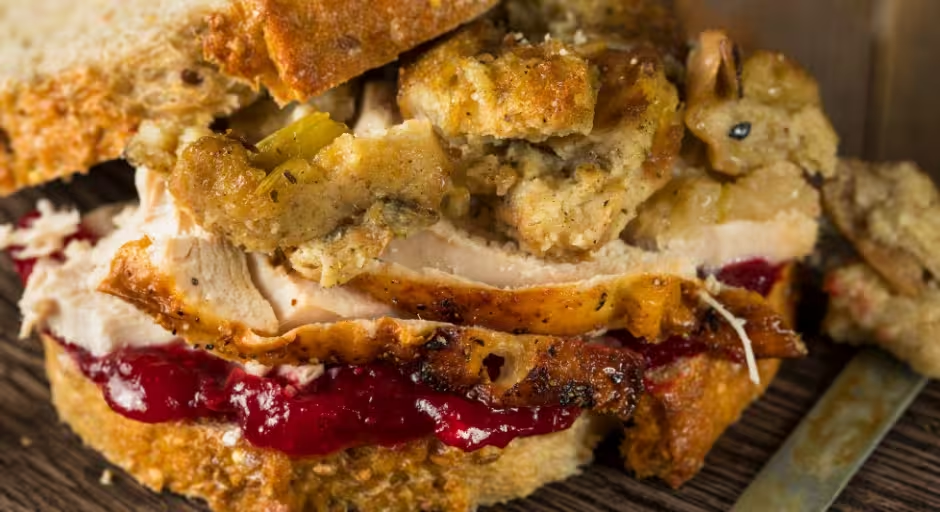
Of course, Thanksgiving doesn't always end when everyone leaves the table. Sometimes it continues. And continues. And continues. Because somewhere in the refrigerator there's a container of stuffing, half a pie, and enough turkey to feed a small marching band.
Leftovers can be wonderful. I happen to think there's something especially nice about having a delicious meal ready without cooking it all again. But remember our holiday snowball? This is one of those places where it can quietly start rolling. Thanksgiving dinner becomes leftovers for lunch. And dinner. And lunch the next day. Then someone decides there's only a little pie left, so we might as well finish it. Suddenly a special occasion has become a four-day eating event, not because we planned it, but because the food was there.
So before the leftovers take over your fridge, think about what you'd really like to keep enjoying. Another serving of stuffing tomorrow? Wonderful. A turkey sandwich? Fantastic. But you don't have to eat every leftover just because it exists. You can portion some into containers, freeze what keeps for another time, send food home with willing guests, or work leftovers into your usual meals instead of recreating the whole feast every time you open the refrigerator.
And please remember: you are not personally responsible for making every last bite disappear. Many of us care about food waste, but eating beyond what we need isn't the only way to prevent it. Planning, sharing, storing or freezing food is often the better solution. And when it's time to let something go, you can do that without feeling obligated to eat it first.
Ask a hundred people that question and you'd probably hear a hundred different answers. For some, success means continuing to lose weight through the season. For others, it means maintaining. For someone working through emotional eating, success might mean noticing when stress is influencing their choices. For someone who has spent years feeling anxious around holiday meals, it might mean sitting down to Thanksgiving dinner and actually enjoying it. And for someone else, success might simply mean getting through a difficult holiday with kindness and compassion for themselves.
All of those deserve recognition, because we're not all starting from the same place. Our lives don't suddenly become identical just because the calendar says November. Some of you will be surrounded by family and friends. Some will be working. Some may be traveling. Others may be spending the holiday alone, by choice or because life turned out differently than you expected. Some of you are celebrating a wonderful new chapter, and some are carrying grief, stress, financial pressure or other challenges that make the season especially hard.
There's room for all of those experiences in our conversations over the coming weeks. Taking care of yourself during the holidays isn't just about what's on your plate. It's also about recognizing what you need emotionally, mentally and physically. And sometimes what you need most is permission to stop expecting yourself to do everything perfectly.
So instead of ending with a long list of holiday rules, let's try something different: one simple holiday promise. Not a promise to avoid every dessert. Not a promise to lose a certain amount of weight before January. And definitely not a promise that you'll never have a second helping of stuffing. Just this:
"This holiday season, I'm going to enjoy the moments that matter to me, and I'm going to continue taking care of myself along the way."
That's it, and you get to decide what it looks like. Maybe it means choosing a few favorite holiday foods and truly savoring them. Maybe it means keeping your usual breakfast routine, even when dinner is special. Maybe it means continuing to track in Healthi, or choosing maintenance for a little while. Maybe it means enjoying a celebration without criticizing yourself afterward. Or maybe it means remembering that one meal, one day, or even one difficult week doesn't have the power to erase everything you've accomplished.
You don't have to earn your place at the holiday table. You don't have to apologize for enjoying traditional foods. And you don't have to wait until January 1 to start making choices that support your health. Because when the holiday meal is over, your life continues. The next morning still arrives, and you'll still have chances to nourish yourself, move in ways that feel good, get some rest, and make decisions that support your goals.
That's the beauty of building habits instead of chasing perfection. They don't require a fresh calendar. They just require you to keep coming back to them. And if things don't go quite the way you hoped? Well, welcome to being human. You can make another choice. And another. And another. No dramatic announcements, no declaring that everything is ruined, and absolutely no waiting for the first Monday in January.
Over the next several weeks, I'll keep this conversation going beyond the dinner table, because food is only one piece of the holiday puzzle. There are family expectations, changing traditions, crowded calendars, workplace celebrations, emotional pressures, and plenty of situations that can make this season more complicated than we'd like. We'll explore how to navigate them while still making room for your own needs and well-being.
Until then, remember the thought we started with: the holidays are days. They are not months. A special meal is just that, a special meal. It isn't the start of a six-week failure. It isn't proof that you lack discipline. And it certainly isn't a reason to give up on yourself.
So when Thanksgiving arrives, I hope you enjoy the foods and traditions that mean something to you. I hope you spend less time worrying about doing everything perfectly. And I hope you remember that you can celebrate the season and still care for yourself. Those two things belong together.
Whether your holiday includes a beautifully set table, a casual meal with friends, a quiet afternoon at home, or a slightly overcooked turkey nobody is ever going to let you forget, I hope it includes a little joy, a little peace, and a whole lot less guilt.
Take good care of yourselves, enjoy the moments that matter, and remember: we're celebrating HoliDAYS, not HoliMONTHS.
Want a little support through the season? Track your food, weight, activity and BITES in the Healthi app, free or with Pro, at healthiapp.com, and switch to maintenance whenever you need to. Exploring GLP-1 care? Visit healthicare.com.
November 23, 2026