

When you think about GLP-1 medications, weight loss is probably the first thing that comes to mind—and for good reason! These meds have been game-changers for many people looking to shed some extra pounds. But there’s more to them than just weight loss!
GLP-1 medications are best known for helping people lose weight, but clinical trials have shown several other meaningful health benefits. In large studies, semaglutide reduced the risk of major cardiovascular events by 20% in people with heart disease, slowed kidney disease progression in people with type 2 diabetes, and improved a serious form of liver disease called MASH. GLP-1 medicines also improve blood sugar control, show benefits for women with PCOS, and lower an inflammation marker called CRP. One medication, tirzepatide, is now approved in the United States for obstructive sleep apnea in adults with obesity.
These benefits are real, but they are not interchangeable. Each result comes from a specific medicine, dose, and group of patients.
The strongest evidence for GLP-1 benefits beyond weight loss comes from three large trials of semaglutide: one in heart disease, one in kidney disease, and one in liver disease. In each case, patients taking semaglutide had meaningfully better outcomes than patients taking a placebo.
Cardiovascular disease (the SELECT trial). Semaglutide 2.4 mg weekly reduced the risk of major cardiovascular events, such as heart attack and stroke, in people who already had heart disease.
Kidney disease (the FLOW trial). In people with type 2 diabetes and chronic kidney disease, semaglutide 1 mg slowed the progression of kidney damage. The 1 mg dose is the dose used in diabetes care, lower than the 2.4 mg weight-management dose.
Liver disease (the ESSENCE trial). Semaglutide 2.4 mg improved MASH, a form of fatty liver disease that involves inflammation and scarring and can progress to serious liver damage.
How these three results compare. All three trials tested semaglutide against placebo, but they answer different questions. SELECT measured a reduced risk of future events, heart attacks and strokes, in a very large group over more than three years. FLOW measured slowed progression of an existing disease in a smaller, higher-risk group. ESSENCE measured reversal of liver inflammation in a biopsy-confirmed population. The heart and kidney findings are about preventing events; the liver finding is about improving existing damage. Which one matters to you depends on which of these conditions, if any, you actually have.
These results belong to semaglutide at the studied doses in the studied populations. They should not be assumed to extend automatically to every GLP-1 medicine or every patient.
GLP-1 medicines improve blood sugar control, and several have been used for years to treat type 2 diabetes. They work in part by improving insulin secretion in a glucose-dependent way, meaning they help the body release insulin when blood sugar rises. Clinical trials in women with PCOS also show improvements in insulin resistance, which is a central feature of that condition. That connection is why GLP-1 medicines have drawn so much interest for PCOS.
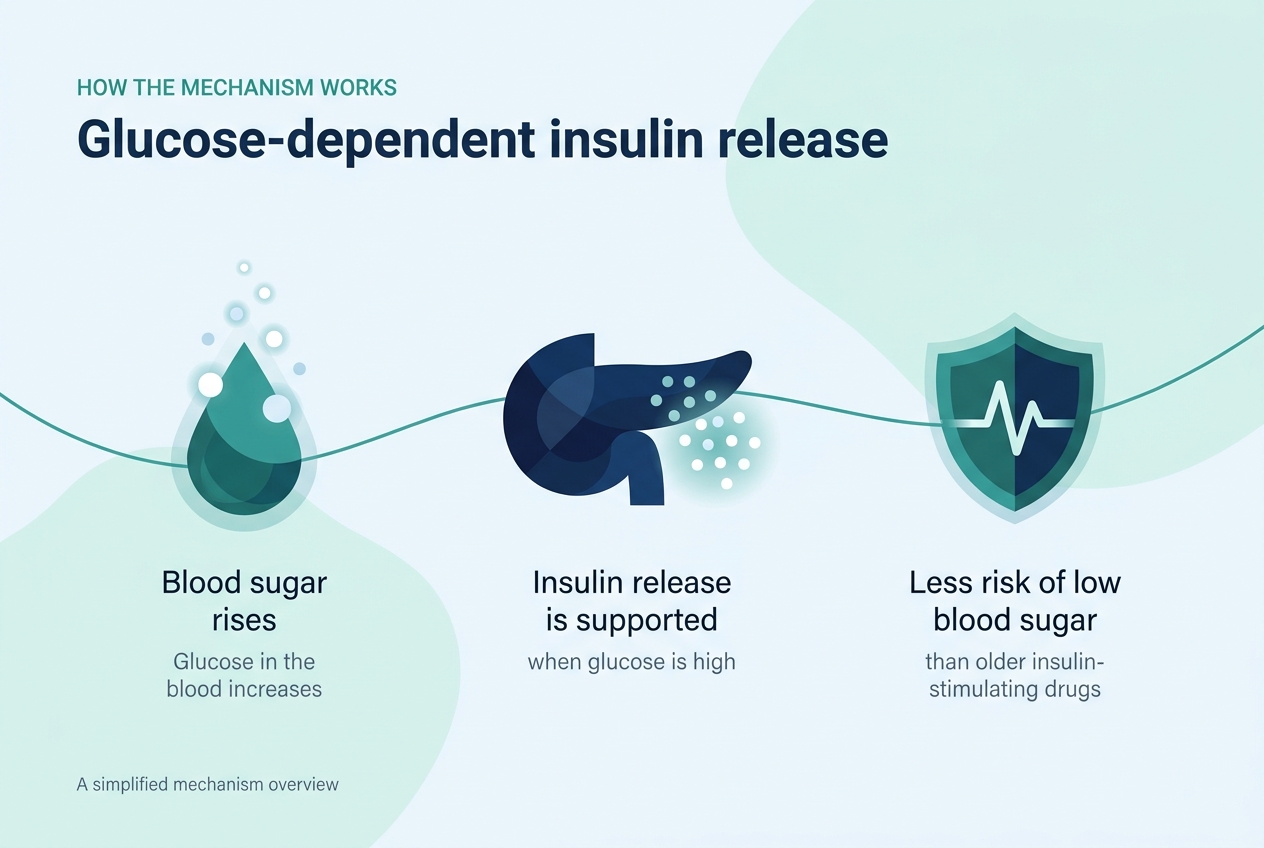
Blood sugar and insulin resistance. In people for whom these medicines are indicated, GLP-1 medications improve glycemic control and insulin dynamics. Source: Review of GLP-1 mechanisms. Having insulin resistance on its own, however, does not by itself make someone eligible for a particular GLP-1 product. Eligibility depends on approved indications and your individual clinical picture.
PCOS. Polycystic ovary syndrome often involves insulin resistance, weight gain, and metabolic problems. A 2025 meta-analysis combined 13 randomized trials of GLP-1 receptor agonists in adult women with PCOS and found consistent improvements in weight-related measures and insulin resistance. Source: 2025 PCOS meta-analysis, Scientific Reports
The pooled average differences compared with control groups were:
The studied medicines included exenatide, liraglutide, and semaglutide. The improvement in HOMA-IR matters because insulin resistance drives many PCOS symptoms, so a treatment that reduces it addresses part of the underlying problem, not just the scale. Some glucose and hormone findings across the trials were mixed, and the studies differed from one another considerably, so individual results can vary.
There is no single GLP-1 medicine that research has established as universally best for PCOS. The evidence supports benefits from several studied agents, including exenatide, liraglutide, and semaglutide, but the trials do not crown one winner.
The right choice for an individual patient depends on three things: the medicine's approved indication, the evidence behind that specific medicine, and your own clinical profile, including your metabolic health, other conditions, and treatment goals. Because insulin resistance is such a driver in PCOS, a clinician may weigh a medicine's metabolic effects alongside its weight effects. This is a decision to make with a qualified clinician who knows your history, not from a ranking list.
Coverage varies widely, and there is no general answer that applies to every plan. Whether a GLP-1 medicine is covered for PCOS depends on the exact medicine, your diagnosis, your specific plan's benefits, and any prior-authorization rules your insurer applies.
The only reliable way to know is to check your current plan documents and confirm directly with your insurer at the time you are making the decision. No provider can honestly promise coverage for PCOS treatment in advance, so treat any such promise as a red flag.
GLP-1 medications do lower C-reactive protein (CRP), a blood marker of inflammation, in human trials. But a lower CRP number is not the same thing as a proven clinical benefit, and GLP-1 medicines are not a general inflammation treatment.
The evidence so far looks like this:
The cardiovascular and kidney results described above are hard clinical outcomes: fewer heart attacks, fewer strokes, slower kidney failure. CRP is a biomarker, a signal in the blood that is associated with inflammation. Researchers do not yet fully understand the mechanisms behind the CRP reductions or whether lowering CRP with a GLP-1 medicine independently prevents disease. So if you see a lower CRP on a lab report while taking one of these medicines, that is a reasonable and encouraging finding, but it does not guarantee a specific health outcome on its own.
Tirzepatide improved obstructive sleep apnea (OSA) outcomes in two phase 3 clinical trials, and the FDA has approved Zepbound (tirzepatide) for moderate-to-severe OSA in adults with obesity. Source: NEJM, SURMOUNT-OSA trials; FDA approval announcement
OSA is a condition in which breathing repeatedly stops and starts during sleep, and it is closely linked to excess weight. Because OSA diagnosis and management involve sleep testing and often specialist care, it follows its own care path. If you suspect you have sleep apnea, loud snoring, witnessed pauses in breathing, or heavy daytime sleepiness are common signs, the right next step is a conversation with a clinician who can evaluate you for testing and treatment.
Researchers are also studying GLP-1 medicines for knee osteoarthritis, heart failure with preserved ejection fraction, and blood pressure. The strongest of these findings come from randomized trials, while a much broader list comes from association-only research.
These results describe specific medicines, measures, and study groups, not guaranteed individual outcomes.
The benefits in this article are real, but each one is tied to a specific medicine, dose, and patient group. A simple way to think about what applies to you:
If you are already considering GLP-1 treatment for weight management, the most useful next step is a conversation with a qualified clinician about the exact medicine, whether it fits your health profile, and what your coverage looks like.
August 11, 2026